Haohong Zhou1, Shichao Huang2, Guoxin Zhong3, and Jun Huang4This email address is being protected from spambots. You need JavaScript enabled to view it.
1Guangzhou Power Supply Bureau of Guangdong Power Grid Co., Ltd, Guangzhou 510665, China
Received: August 26, 2025 Accepted: December 23, 2025 Publication Date: March 5, 2026
Copyright The Author(s). This is an open access article distributed under the terms of the Creative Commons Attribution License (CC BY 4.0), which permits unrestricted use, distribution, and reproduction in any medium, provided the original author and source are cited.
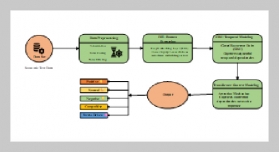
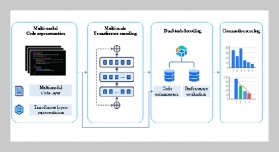
In response to the growing demand for knowledge-intensive operations and the widespread adoption of cloud-based document management systems, this study proposes a comprehensive framework for high-quality knowledge acquisition and intelligent value augmentation in office scenarios. Addressing key challenges such as the difficulty in processing unstructured documents, low accuracy in knowledge extraction and limited reusability in smart office environments, we design a multi-stage knowledge processing pipeline. This includes document structure restoration, semantic representation using BERT-based models, named entity recognition with BiLSTM-CRF, relation extraction and entity disambiguation via cosine similarity. The methodology leverages state-of-the-art NLP techniques to ensure accurate entity recognition and relationship extraction, with a focus on overcoming semantic ambiguity and improving task relevance. The extracted knowledge is fused into structured triples and organized into a dynamically evolving knowledge graph guided by ontology constraints and external knowledge integration (e.g., Wikidata). This continuous evolution of the knowledge graph allows for adaptive learning and improves recommendations based on user feedback and real-time office needs. On top of this graph, we implement intelligent services including semantic QA, task recommendation via GAT and document-driven reasoning. Experimental results on over 42,000 real-world enterprise documents across domains (government, finance, manufacturing) demonstrate that our method achieves superior performance in precision (0.93), recall (0.91) and fusion consistency (0.89), significantly outperforming baseline methods.
[1] Z. Wu and C. Liang, (2024) “A review and prospects of manufacturing process knowledge acquisition, representation, and application" Machines 12(6): 416. DOI: 10.3390/machines12060416.
[2] L. Zhang, Y. Li, Y. Pan, and L. Ding, (2024) “Advanced informatic technologies for intelligent construction: A re view" Engineering Applications of Artificial Intelligence 137: 109104. DOI: 10.1016/j.engappai.2024.109104.
[3] H. Li, Z. Zhao, Y. Cao, L. Su, Y. Zhang, and J. Zhao, (2025) “Servitization in the construction industry: a multiple case study from a value-adding perspective" Journal of Business & Industrial Marketing 40(1): 116–135. DOI: 10.1108/JBIM-03-2024-0144.
[4] R. Zhang, H. Xu, S. Jian, Y. Tan, H. Zhou, and R. Xu, (2026) “Angel or devil: Discriminating hard samples and anomaly contaminations for unsupervised time series anomaly detection" Neural Networks: 108532. DOI: https: //doi.org/10.1016/j.neunet.2025.108532.
[5] S. Ali, A. Rani, M. A. Dar, M. M. Qaisrani, M. Noman, K. Yoganathan, M. Asad, A. Berhanu, M. Barwant, and D.Zhu,(2024) “Recent advances in characterization and valorization of lignin and its value-added products: challenges and future perspectives" Biomass 4(3): 947 977. DOI: 10.3390/biomass4030053.
[6] J. Fang, L. Zhao, and S. Li, (2024) “Exploring open government data ecosystems across data, information, and business" Government Information Quarterly 41(2): 101934. DOI: 10.1016/j.giq.2024.101934.
[7] A. D. Smith and G. Moreno, (2025) “Omnichannel transportation, warehousing and manufacturing quality characteristics in a post-COVID environment: case and empirical study" International Journal of Logistics Systems and Management 51(1): 79–103. DOI: 10.1504/IJLSM.2025.146060.
[8] M. G. Ayadi and H. Mezni, (2024) “Enabling Configurable Workflows in Smart Environments with Knowledge-based Process Fragment Reuse: MG Ayadi and H. Mezni" Journal of Grid Computing 22(2): 48. DOI: 10.1007/s10723-024-09763-5.
[9] W. Fan and Z. Li, (2024) “Evaluation of comprehensive early warning for higher education institutions’ cloud model of simulated enterprise management cockpit " Plosone 19(6): e0305652. DOI: 10.1371/journal.pone.0305652.
[10] G. Liu, J. Liu, P. Gao, J. Yu, and Z. Pu, (2024) “Under standing mechanisms of digital transformation in state owned enterprises in China: An institutional perspective" Technological Forecasting and Social Change 202: 123288. DOI: 10.1016/j.techfore.2024.123288.
[11] H. Mora, F. A. Pujol, T. Ramirez-Gordillo, and A. Jimeno, (2024) “Mobile cloud computing paradigm: A survey of operational concerns, challenges and open is sues" Transactions on Emerging Telecommunications Technologies 35(12): e70020. DOI: 10.1002/ett.70020.
[12] C. Zhang, G. Shan, J. Lim, and B.-H. Roh, (2025) “Dynamic Reinforcement Learning for Optimal Go AI Training: Adaptive Adjustment and Optimization" IEEE Transactions on Consumer Electronics 71(1): 292 302. DOI: 10.1109/TCE.2024.3487141.
[13] G. Piras, F. Muzi, and V. A. Tiburcio, (2024) “Digital management methodology for building production optimization through digital twin and artificial intelligence integration" Buildings 14(7): 2110. DOI: 10.3390/buildings14072110.
[14] T.ZhengandY.Wang.“Research on auditing of large scale instruments and equipment opening and sharing in universities based on data mining”. In: Fifth International Conference on Computer Vision and Information Technology (CVIT 2024). 13443. SPIE. 2024, 96 105. DOI: 10.1117/12.3055791.
[15] K. Chava, (2024) “The Role of Cloud Computing in Accelerating AI-Driven Innovations in Healthcare Systems" European Advanced Journal for Emerging Tech nologies (EAJET)-p-ISSN 3050-9734 en e-ISSN 3050 9742 2(1): DOI: 10.5281/zenodo.15876802.
[16] M.Núñez-Merino, J. M. Maqueira-Marín, J. Moyano Fuentes, and C. A. Castaño-Moraga, (2025) “Product development process for a new healthcare service in the Industry 4.0 context: an action research approach" Production Planning & Control 36(2): 177–196. DOI: 10.1080/09537287.2024.2349224.
[17] G. Piras, F. Muzi, and V. A. Tiburcio, (2024) “Digital management methodology for building production optimization through digital twin and artificial intelligence integration" Buildings 14(7): 2110. DOI: 10.3390/buildings14072110.
[18] X. Guan, Z. Liu, S. Wu, and S. Yin. “The Nexus of Culture and Innovation: Unraveling How Organizational Culture Fuels or Suppresses Creativity”. In: Proceedings of the 2023 5th International Conference on Economic Management and Cultural Industry (ICEMCI 2023). Atlantis Press, 2024, 561–567. DOI: 10.2991/978 94-6463-368-9_67.
[19] P. Liang and Y. Chen, (2024) “Effects and Mechanisms of Higher Education Development on Intelligent Productivity Advancement: An Empirical Analysis of Provincial Panel Datain China " Sustainability 16(24): 11197. DOI: 10.3390/su162411197.
[20] Z. Sun, Q. Zong, Y. Mao, and G.Wu,(2024)“Exploring the features and trends of industrial product e-commerce in China using text-mining approaches" Information 15(11): 712. DOI: 10.3390/info15110712.
[21] W. Wen, S. Gu, Y. Zhang, W. Yang, and X. Guo, (2024) “Standard framework construction of technology and equipment for big data in crop phenomics" Engineering 42: 175–184. DOI: 10.1016/j.eng.2024.06.001.
[22] A. Addas, M. N. Khan, and F. Naseer, (2024) “Waste management 2.0 leveraging internet of things for an efficient and eco-friendly smart city solution" Plosone 19(7): e0307608. DOI: 10.1371/journal.pone.0307608.
[23] P. Liang and Y. Chen, (2024) “Effects and Mechanisms of Higher Education Development on Intelligent Productivity Advancement: An Empirical Analysis of Provincial Panel Data in China "Sustainability 16(24): 11197. DOI: 10.3390/su162411197.
[24] Z.Sun,Q.Zong,Y.Mao,andG.Wu,(2024)“Exploring the features and trends of industrial product e-commerce in China using text-mining approaches" Information 15(11): 712. DOI: 10.3390/info15110712.
[25] Y. Zhang, G. Huang, Y. Zhao, X. Lu, Y. Wang, C. Wang, X. Guo, and C. Zhao, (2025) “Revolutionizing crop breeding: Next-generation artificial intelligence and big data-driven intelligent design" Engineering 44: 245 255. DOI: 10.1016/j.eng.2024.11.034.
[26] A. Addas, M. N. Khan, and F. Naseer, (2024) “Waste management 2.0 leveraging internet of things for an efficient and eco-friendly smart city solution" Plosone 19(7): e0307608. DOI: 10.1371/journal.pone.0307608.
[27] F. Parveen and A. G. Slater, (2025) “Digitalisation of catalytic processes for sustainable production of biobased chemicals and exploration of wider chemical space" Catalysis Science & Technology 15(6): 1689–1701. DOI: 10.1039/D4CY01525H.
[28] J. Tan, J. Shi, L. Wu, B. Chen, H. Tang, C. Zhang, W. Zhang, S. Wang, and J. Wan, (2025) “Embodied Intelligence Empowering Customized Manufacturing: Architecture, Opportunities, and Challenges" IEEE Access 13: 92740–92755. DOI: 10.1109/ACCESS.2025.3572778.
[29] H. Liu and J. Ren, (2025) “Intelligent manufacturing policy, ESG performance, and total factor productivity: Evidence from China" PloSone 20(2): e0311369. DOI: 10.1371/journal.pone.0311369.
[30] Y. Xu, W. Li, J. Tai, and C. Zhang, (2022) “A Bibliometric-Based Analytical Framework for the Study of Smart City Lifeforms in China" International journal of environmental research and public health 19(22): 14762. DOI: 10.3390/ijerph192214762.
We use cookies on this website to personalize content to improve your user experience and analyze our traffic. By using this site you agree to its use of cookies.