Jianing Deng, Ming Yu, Wenbo Yu, and Yuanchun ManThis email address is being protected from spambots. You need JavaScript enabled to view it.
Changchun University of Chinese Medicine, Jilin, Changchun, 130000, China
Received: October 4, 2025 Accepted: November 16, 2025 Publication Date: March 5, 2026
Copyright The Author(s). This is an open access article distributed under the terms of the Creative Commons Attribution License (CC BY 4.0), which permits unrestricted use, distribution, and reproduction in any medium, provided the original author and source are cited.
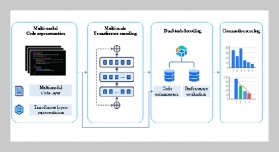
A risk classification framework for student mental health is proposed, combining Principal Component Analysis (PCA), Z-score normalization, and a Seven-Spot Ladybird-Tuned Dynamic Elman Recurrent Neural Network (SSL-DERNN). Model hyperparameters were tuned using a Seven-Spot Ladybird Optimization (SSLO) meta heuristic. The proposed framework combines the big data analytics with a Seven-Spot Ladybird-Tuned Dynamic Elman Recurrent Neural Network (SSL-DERNN) to handle big, heterogeneous educational and psychological data effectively. The combination of meta-heuristic tuning and dynamic recurrent learning allows learning features robustly and predicting mental-health risks over large groups of students. Experiments used stratified 5 fold cross-validation; reported metrics are mean ±95% confidence intervals across folds. SSL-DERNN achieved accuracy 97.0% ( 95% CI: 96.1-97.9%), precision 95.5% ( 95% CI: 94.2−96.8% ), recall 93.2% ( 95% CI: 91.6−94.8% ) and F1-score 92.6%(95% CI: 91.0-94.2%), significantly outperforming ANN, RF, RF-ANN, LSTM, GRU and BiLSTM baselines (paired tests, p < 0.01 ). Ablation analysis confirmed contributions of PCA and SSLO. Hardware, software, and reproducible hyperparameters are reported to aid replication.
[1] F. Kondirolli and N. Sunder, (2022) “Mental health effects of education" Health Economics 31(1): 22–39. DOI: 10.1002/hec.4565.
[2] Y. Jin, (2022) “The promoting effect of mental health education on students’ social adaptability: implications for environmental" Journal of Environmental and Public Health 2022(1): 1607456. DOI: 10.1155/2022/1607456.
[3] X. Li, Y. Gao, and Y. Jia, (2022) “Positive guidance effect of ideological and political education integrated with mental health education on the negative emotions of college students" Frontiers in Psychology 12: 742129. DOI: 10.3389/fpsyg.2021.742129.
[4] C. Wiedermann, V. Barbieri, B. Plagg, P. Marino, G. Piccoliori, and A. Engl, (2023) “Fortifying the foundations: a comprehensive approach to enhancing mental health support in educational policies amidst crises" Healthcare 11(10): 1423. DOI: 10.3390/healthcare11101423.
[5] B. Wang, (2022) “Exploration of the path of innovation and entrepreneurship education for college students from the perspective of mental health education" Journal of Healthcare Engineering 2022(1): 2659160. DOI: 10.1155/2022/2659160.
[6] B. Afsharnejad, B. Milbourn, M. Hayden-Evans, E. Baker-Young, M. Black, C. Thompson, S. McGarry, M. Grobler, R. Clifford, F. Zimmermann, and V. Kacic, (2023) “The efficacy of the ’Talk-to-Me’ suicide prevention and mental health education program for tertiary students: a crossover randomised control trial" European Child &Adolescent Psychiatry 32(12): 2477–2489. DOI: 10.1007/s00787-022-02094-4.
[7] A. Rohatgi and S. Dash, (2023) “Period poverty and mental health of menstruators during the COVID-19 pan demic: Lessons and implications for the future" Fron tiers in Global Women’s Health 4: 1128169. DOI: 10.3389/fgwh.2023.1128169.
[8] Z. Hyseni Duraku, H. Davis, and E. Hamiti, (2023) “Mental health, study skills, social support, and barriers to seeking psychological help among university students: a call for mental health support in higher education" Fron tiers in Public Health 11: 1220614. DOI: 10.3389/fpubh.2023.1220614.
[9] F. Idris, I. Zulkipli, K. Abdul-Mumin, S. Ahmad, S. Mitha, H. Rahman, R. Rajabalaya, S. David, and L. Naing, (2021) “Academic experiences, physical and mental health impact of the COVID-19 pandemic on students and lecturers in health care education" BMC Medical Education 21(1): 542. DOI: 10.1186/s12909-021-02968 2.
[10] J. Newberry Le Vay, A. Cunningham, L. Soul, H. Dave, L. Hoath, and E. Lawrance, (2024) “Integrating mental health into climate change education to inspire cli mate action while safeguarding mental health" Frontiers in Psychology 14: 1298623. DOI: 10.3389/fpsyg.2023. 1298623.
[11] V. R. Vallu, V. K. Samudrala, and W. Pulakhandam, (2025) “AI-driven digital twin framework for accurate mental health stress detection and personalized manage ment":
[12] J. Han, Z. Zhang, C. Mascolo, E. André, J. Tao, Z. Zhao, and B. Schuller, (2021) “Deep learning for mobile mental health: Challenges and recent advances" IEEE Signal Processing Magazine 38(6): 96–105. DOI: 10.1109/MSP.2021.3099293.
[13] S. Gu, (2025) “Deep Learning-Based Prediction and Intervention Model for College Students’ Mental Health Status" International Journal of High Speed Electronics and Systems: 2540503. DOI: 10.1142/S0129156425405030.
[14] S. Hinduja, M. Afrin, S. Mistry, and A.Krishna, (2022) “Machinelearning-based proactive social-sensor service for mental health monitoring using Twitter data" International Journal of Information Management Data Insights 2(2): 100113. DOI: 10.1038/s41591-022 01811-5.
[15] B.Happell,A.Donovan,T.Warner,J.Sharrock,andS. Gordon, (2022) “Creating or taking opportunity: Strategies for implementing expert by experience positions in mental health academia" Journal of Psychiatric and Mental Health Nursing 29(4): 592–602. DOI: 10.1111/ jpm.12839.
[16] O. Oti and I. Pitt, (2021) “Online mental health interventions designed for students in higher education: A user-centered perspective" Internet Interventions 26: 100468. DOI: 10.1016/j.invent.2021.100468.
[17] S. Mahmoodi, M. Ahmadzad-Asl, M. Eslami, M. Abdi, Y. Hosseini Kahnamoui, and M. Rasou lian, (2022) “Mental health literacy and mental health information-seeking behavior in Iranian university students" Frontiers in Psychiatry 13: 893534. DOI: 10.3389/fpsyt.2022.893534.
[18] N. Salimi, B. Gere, W. Talley, and B. Irioogbe, (2023) “College students’ mental health challenges: Concerns and considerations in the COVID-19 pandemic" Journal of College Student Psychotherapy 37(1): 39–51. DOI: 10.1080/87568225.2021.1890298.
[19] J. Rahman, T. Gedeon, S. Caldwell, R. Jones, and Z. Jin, (2021) “Towards effective music therapy for mental health care using machine learning tools: human affective reasoning and music genres" Journal of Artificial Intelligence and Soft Computing Research 11(1): 5 20.
[20] A. Sharma, I. Lin, A. Miner, D. Atkins, and T. Althoff, (2023) “Human–AI collaboration enables more empathic conversations in text-based peer-to-peer mental health sup port" Nature Machine Intelligence 5(1): 46–57. DOI: 10.1038/s42256-022-00593-2.
[21] T. Aldhyani, S. Alsubari, A. Alshebami, H. Alkahtani, andZ.Ahmed,(2022)“Detectingandanalyzingsuicidal ideation on social media using deep learning and machine learning models" International Journal of Environ mental Research and Public Health 19(19): 12635. DOI: 10.3390/ijerph191912635.
[22] O. Adeniji, S. Adeyemi, and S. Ajagbe, (2022) “An improved bagging ensemble in predicting mental disorder using a hybridized random forest-artificial neural network model" Informatica 46(4): DOI: 10.31449/inf.v46i4.3916.
[23] S. Hochreiter and J. Schmidhuber, (1997) “Long short term memory" Neural Computation 9(8): 1735–1780.
[24] K. Cho, B. Van Merriënboer, C. Gulcehre, D. Bah danau, F. Bougares, H. Schwenk, and Y. Ben gio. “Learning phrase representations using RNN encoder–decoder for statistical machine translation”. In: Proceedings of the 2014 Conference on Empirical Meth ods in Natural Language Processing (EMNLP). Association for Computational Linguistics. 2014, 1724–1734.
[25] A. Graves and J. Schmidhuber, (2007) “Framewise phoneme classification with bidirectional LSTM net works" IEEE Transactions on Neural Networks 18(5): 602–610. DOI: 10.1109/TNN.2007.895243.
[26] A. Vaswani, N. Shazeer, N. Parmar, J. Uszkoreit, L. Jones, A. Gomez, Ł. Kaiser, and I. Polosukhin. “Attention is all you need”. In: Advances in Neural Information Processing Systems (NeurIPS 30). 2017, 5998 6008.
We use cookies on this website to personalize content to improve your user experience and analyze our traffic. By using this site you agree to its use of cookies.