Qiang Zhang1 and Jing Hu2This email address is being protected from spambots. You need JavaScript enabled to view it.
1School of Art, Anhui Jianzhu University Anhui Hefei, 230022, China
2School of Art Design, Anhui Wenda University of Information Engineering, Anhui Hefei, 230022, China
Received: November 20, 2025 Accepted: January 5, 2026 Publication Date: February 14, 2026
Copyright The Author(s). This is an open access article distributed under the terms of the Creative Commons Attribution License (CC BY 4.0), which permits unrestricted use, distribution, and reproduction in any medium, provided the original author and source are cited.
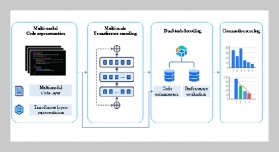
Modern architectural design is becoming data-driven, sustainable, and culturally adaptive through intelligent sensing, IoT, and algorithmic frameworks. This paper introduces a methodology combining clustering opti mization, deep generative modelling, and parametric reconstruction to digitize traditional Chinese architecture and design modern green buildings. Using StructGAN, neural simulations, and reinforcement learning, the system reconstructs heritage forms, optimizes structures, and monitors energy patterns. Results show high design fidelity, efficiency, and cultural coherence, bridging tradition with modernity.
Keywords: space aesthetics; Chinese architectural elements; Modern architectural design; Optimization of clustering algorithm
[1] G. Zocchi, M. Hosseini, and G. Triantafyllidis, (2024) “Exploring the Synergy of Advanced Lighting Controls, Building Information Modelling and Internet of Things for Sustainable and Energy-Efficient Buildings: A Systematic Literature Review" Sustainability 16(24): 10937. DOI: 10.3390/su162410937.
[2] B. Garlik, (2022) “Energy Centers in a Smart City as a Platform for the Application of Artificial Intelligence and the Internet of Things" Applied Sciences 12(7): 3386. DOI: 10.3390/app12073386.
[3] H. Zhou, T. Wu, K. Sun, and C. Zhang, (2022) “To wards High Accuracy Pedestrian Detection on Edge GPUs" Sensors 22(16): 5980. DOI: 10.3390/s22165980.
[4] J. Xu and Y. Zupu, (2025) “Innovation and Inheritance Strategies of Ink Art Under the Software-Defined Internet of Things Architecture" International Journal of High Speed Electronics and Systems: 2540371. DOI: 10.1142/S0129156425403717.
[5] R. Wagner and D.Cozmiuc, (2022) “Extended Reality in Marketing—A Multiple Case Study on Internet of Things Platforms" Information 13(6): 278. DOI: 10.3390/info13060278.
[6] F. Costa, S. Genovesi, M. Borgese, A. Michel, F. A. Dicandia, and G. Manara, (2021) “A Review of RFID Sensors, the New Frontier of Internet of Things" Sensors 21(9): 3138. DOI: 10.3390/s21093138.
[7] Y. Li, Z. Sun, M. Huang, L. Sun, H. Liu, and C. Lee, (2024) “Self-Sustained Artificial Internet of Things Based on Vibration Energy Harvesting Technology: Toward the Future Eco-Society" Advanced Energy and Sustain ability Research 5(11): 2400116. DOI: 10.1002/aesr. 202400116.
[8] Y. Deng, L. Xie, C. Xing, and L. Cai, (2022) “Digital City Landscape Planning and Design Based on Spatial Information Technology" Neural Computing and Ap plications 34(12): 9429–9440.
[9] T. Alam, (2024) “Metaverse of Things (MoT) Applications for Revolutionizing Urban Living in Smart Cities" Smart Cities 7(5): 2466–2494. DOI: 10.3390/smartcities7050096.
[10] S. A. Naga, (2021) “Optimizing Cloud Data Center Re source Allocation with a New Load-Balancing Approach" International Journal of Information Technology and Computer Engineering 9(2):
[11] X. Jiang, (2025) “The Analysis of Interactive Furniture Design System Based on Artificial Intelligence" Scientific Reports 15: 28961. DOI: 10.1038/s41598-025-14886-0.
[12] A. H. Siddique, S. Tasnim, F. Shahriyar, M. Hasan, and K. Rashid, (2021) “Renewable Energy Sector in Bangladesh: The Current Scenario, Challenges and the Role of IoT in Building a Smart Distribution Grid" Energies 14(16): 5083.
[13] P. Zhang, W. Xu, H. Gao, K. Niu, X. Xu, X. Qin, and F. Zhang, (2022) “Toward Wisdom-Evolutionary and Primitive-Concise 6G: A New Paradigm of Semantic Communication Networks" Engineering 8: 60–73.
[14] G. Ou, Y. Chen, Y. Han, Y. Sun, S. Zheng, and R. Ma, (2025) “Design and Experiment of an Internet of Things Based Wireless System for Farmland Soil Information Monitoring" Agriculture 15(5): 467. DOI: 10.3390/agriculture15050467.
[15] T. Ma, F. Xiao, C. Zhang, J. Zhang, H. Zhang, K. Xu, and X. Luo, (2025) “Digital Twin for 3D Interactive Building Operations: Integrating BIM, IoT-Enabled Building Automation Systems, AI, and Mixed Reality" Automation in Construction 176: 106277. DOI: 10.1016/ j.autcon.2025.106277.
We use cookies on this website to personalize content to improve your user experience and analyze our traffic. By using this site you agree to its use of cookies.