Jiamei Fu1This email address is being protected from spambots. You need JavaScript enabled to view it. and Chaofan Fu2
1School of General Education, Sanda University, Shanghai, 201209, China
2Software Development Center, China Citic Bank, 100000, China
Received: August 25, 2025 Accepted: October 27, 2025 Publication Date: December 21, 2025
Copyright The Author(s). This is an open access article distributed under the terms of the Creative Commons Attribution License (CC BY 4.0), which permits unrestricted use, distribution, and reproduction in any medium, provided the original author and source are cited.
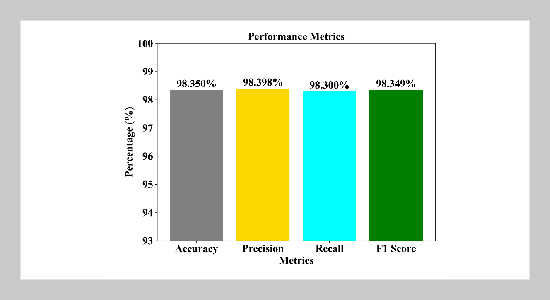
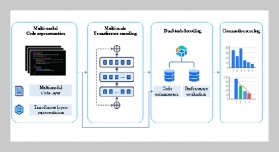
In the fashion e-commerce domain, accurately translating domain-specific content is essential to maintaining the integrity of the brand identity, cultural specificity, and customer connection. Contrasting general translation tasks, fashion translation is more challenging because it involves rapidly evolving terminology, stylistic nuances, and fine-grained descriptions of textures and styles that generic models often fail to capture. Traditional translation systems have struggled with properly interpreting context-reliant fashion terms, as they are generic language model systems with little to no domain knowledge. This paper proposes a new deep learning framework, using a domain-specific transformer model, Fashioner, in combination with a Dual Encoder architecture, to produce improved contextual semantic matching for translations of fashion English. Our model encodes the source and target sentences in an independent fashion using a feature fusion and interaction layer that approximates global semantics in addition to distinguishing stylistic elements. A lightweight classifier is then used to evaluate semantic alignment using the cosine similarity method. The model was evaluated on a fashion-specific bilingual dataset and achieved a high level of accuracy, 98.35%, a precision of 98.39%, a recall of 98.30%, and an F 1-score of 98.34%. Results showed that the proposed approach outperformed baseline approaches such as DSSM, PICSO, and Fashion SAP on benchmark datasets, serving as a comparative point of reference for all approaches. Overall, the proposed approach is an effective tool for cross-lingual fashion translation, as it produces a greater degree of accuracy and contextual sensitivity in matching fashion-specific sentences versus previous approaches, given the context of the fashion domain.
[1] H. Zhao. Teaching and assessing intercultural competence in foreign language teaching in China: practice and challenges. Unpublished manuscript. 2025.
[2] T. F. Silvestrin. “Application of natural language processing techniques in a business context for insight extraction". Accessed July 30, 2025. (mathesis). University of Padua, 2025.
[3] X.WuandJ.Song, (2024) “Three-dimensional artistic design method of ceramic products based on recurrent neural network technology" Journal of Engineering and Applied Science71(1): 152. DOI: 10.1186/s44147-024-00483-x.
[4] H. Yang, (2024) “Optimized English translation system using multi-level semantic extraction and text matching" IEEE Access 12: 96527–96536. DOI: 10.1109/ACCESS.2024.3426652.
[5] S. Bhandari, (2024) “Semantic embedding alignment for cross-institutional clinical text mining" Journal of Big Data Processing, Stream Analytics, and Real-Time Insights 14(10):
[6] ˙ I. Ü. O˘gul, F. Soygazi, and B. E. Bostano˘glu, (2025) “TurkMedNLI: a Turkish medical natural language inference dataset through large language model based translation" PeerJ Computer Science 11: e2662. DOI: 10.7717/peerj-cs.2662.
[7] O. U. Turaevna, (2024) “The characteristics and complexity of translating terms in the sphere of design and fashion" Western European Journal of Linguistics and Education 2(12):
[8] T. Costley, N. Kula, and L. Marten, (2023) “Translanguaging spaces and multilingual public writing in Zambia: tracing change in the linguistic landscape of Ndola on the Copperbelt" Journal of Multilingual and Multi cultural Development 44(9): 773–793. DOI: 10.1080/01434632.2022.2086985.
[9] V. Bharathi and M. Ranjitha, (2025) “An optimized deep learning method for automatic translator for ancient hieroglyphic language from scanned images to English text" SN Computer Science 6(6): 639. DOI: 10.1007/s42979-025-04165-0.
[10] K. Yasmine and D. Lounes. “Translating terms related to forensic psychology from English into Arabic: ‘The Handbook of Forensic Psychology’ by Irving B. Weiner and Randy K. Otto as a case study". Accessed July 30, 2025. (mathesis). Université Mouloud Mammeri, 2023.
[11] M.T.NovotnýandZ.R.Dvoˇráˇcek,(2025)“Fromsocial slang to standard lexicon: a corpus-based analysis of the mainstream adoption of new verbs in English" Journal of Linguistics and Communication Studies 4(2):
[12] J. Min. Cross-language translation algorithm based on word vector and syntactic analysis. Accessed July 30, 2025. 2025.
[13] M.Bangura, (2024) “Socio-legal appraisal of intellectual property rights and innovativeness at University of Sierra Leone, Freetown, Western Urban, Sierra Leone" Euro pean Journal of Applied Science, Engineering and Technology 2(5): 20–30. DOI: 10.59324/ejaset.2024.2(5).03.
[14] Y. Moslem, (2024) “Language modelling approaches to adaptive machine translation" arXiv: DOI: 10.48550/arXiv.2401.14559. eprint: 2401.14559.
[15] J. F. R. Bezerra, A. Kozierkiewicz, and M. Pietranik, (2025) “A novel approach for tweet similarity in a context aware fake news detection model" IEEE Access 13: 57043–57061. DOI: 10.1109/ACCESS.2025.3554540.
[16] J. Zhu, J. Wu, X. Luo, and J. Liu, (2024) “Semantic matching based legal information retrieval system for COVID-19 pandemic" Artificial Intelligence and Law 32(2): 397–426. DOI: 10.1007/s10506-023-09354-x.
[17] Y. Cui and M. Liang, (2024) “Automated scoring of translations with BERT models: Chinese and English language case study" Applied Sciences 14(5): DOI: 10. 3390/app14051925.
[18] Mousterou and A.-M. Akim. NER-Luxury: Named entity recognition for the fashion and luxury domain. Un published manuscript. 2024.
[19] E. Manziuk, O. Barmak, and P. Radiuk. Integration of contextual descriptors in ontology alignment for enrichment of semantic correspondence. Unpublished manuscript. 2024.
[20] R. Ayyadurai, L. Services, and R. Padmavathy, (2024) “Empowering tax compliance through AI-driven financial literacy: a dual perspective on individuals and SMEs" UnknownJournal 1(2):
[21] Y. Han, K. Lee, D. Ki, H.-G. Lee, C. Park, and J. Choo, (2023) “FashionSAP: symbols and attributes prompt for fine-grained fashion vision-language pre-training" arXiv: DOI: 10.48550/arXiv.2304.05051. eprint: 2304.05051.
[22] Y. Li, J. Chen, Y. Li, T. Yu, X. Chen, and H.-T. Zheng, (2022) “Embracing ambiguity: improving similarity oriented tasks with contextual synonym knowledge" arXiv: DOI: 10.48550/arXiv.2211.10997. eprint: 2211.10997.
[23] J. Lee, A. Liu, O. Ahia, H. Gonen, and N. A. Smith, (2023) “That was the last straw, we need more: are translation systems sensitive to disambiguating context?" arXiv: DOI: 10.48550/arXiv.2310.14610. eprint: 2310.14610.
[25] L. Lupo, M. Dinarelli, and L. Besacier. “Divide and rule: effective pre-training for context-aware multi encoder translation models”. In: Proceedings of the 60th Annual Meeting of the Association for Computa tional Linguistics. 2022, 4557–4572. DOI: 10.18653/v1/2022.acl-long.312.
[26] T. Aida and D. Bollegala, (2023) “Swap and predict predicting the semantic changes in words across corpora by context swapping" arXiv: DOI: 10.48550/arXiv.2310. 10397. eprint: 2310.10397.
[27] Y.Baek, K.Lee, D. Ki, H.-G. Lee, C. Park, and J. Choo, (2023) “Towards accurate translation via semantically appropriate application of lexical constraints" arXiv: DOI: 10.48550/arXiv.2306.12089. eprint: 2306.12089.
[28] R. Wicks and M. Post. “Identifying context dependent translations for evaluation set production”. In: Proceedings of the Eighth Conference on Ma chine Translation. 2023, 452–467. DOI: 10.18653/v1/2023.wmt-1.42.
[29] A. R. D. B. Landim et al., (2025) “Analysing the effectiveness of chatbots as recommendation systems in fashion online retail: a Brazil and United Kingdom cross-cultural comparison" Journal of Global Fashion Marketing 16(3): 295–321. DOI: 10.1080/20932685.2025.2491323.
[30] K. S. Nielsen, T. Joanes, D. Webb, S. Gupta, and W. Gwozdz, (2023) “Exploring the psychological characteristics of style and fashion clothing orientations" Journal of Consumer Marketing 40(7): 897–910. DOI: 10.1108/JCM-04-2022-5344.
[31] Y. Wang, M. Yang, and R. Cao. “Fine-grained seman tic alignment with transferred Person-SAM for text based person retrieval”. In: Proceedings of the 32nd ACM International Conference on Multimedia. 2024, 5432–5441. DOI: 10.1145/3664647.3681553.
[32] S. Ghosh. E-commerce text classification (TF-IDF + Word2Vec). Accessed August 8, 2025. 2025.
We use cookies on this website to personalize content to improve your user experience and analyze our traffic. By using this site you agree to its use of cookies.