Jiaqing Shen1,2, Lei Xu1, Maonan Hu1, Mian Zhong1,2This email address is being protected from spambots. You need JavaScript enabled to view it., Fei Hu3, Weimin Li4, and Jiahe Li4
1College of Aviation and Electronics and Electrical, Civil Aviation Flight University of China, Deyang, China
2Key Laboratory of Civil Aviation Flight Technology and Flight Safety, Deyang, China
3Civil Aviation Flight University of China Suining Flight College, Suining, China
4Civil Aviation Flight University of China Luoyang Flight college, Luoyang, China
Received: August 18, 2025 Accepted: November 10, 2025 Publication Date: December 21, 2025
Copyright The Author(s). This is an open access article distributed under the terms of the Creative Commons Attribution License (CC BY 4.0), which permits unrestricted use, distribution, and reproduction in any medium, provided the original author and source are cited.
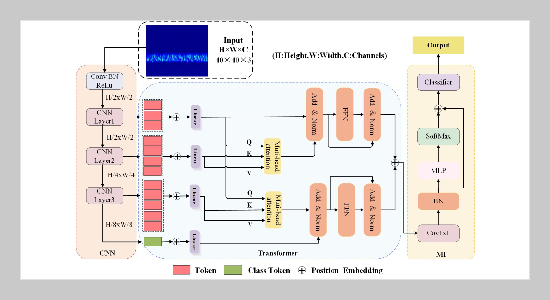
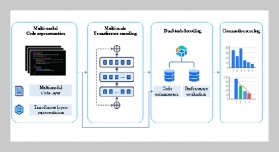
In wireless communication environments, GPS interference poses significant threats to civil aviation safety. To address the challenges in traditional feature extraction and classification methods, this study develops an improved global convolutional neural network (CNNTF) model integrating CNN architecture with Transformer based multi-head self-attention for GPS interference recognition. The model leverages CNN for local feature extraction and Transformer for global feature extraction, enabling simultaneous capture of fine-grained and coarse-grained features. A multi-feature information fusion (MF) mechanism is designed to enhance recognition capability through cross-layer feature integration. Fast Fourier Transform (FFT) and Continuous Wavelet Transform (CWT) transform GPS interference signals into frequency and time-frequency domains, constructing complementary representations. The CNNTF-MF model automatically extracts local details and global features, achieving automatic interference classification. Experimental results on simulated datasets show recognition accuracy improvements of 38%, 26%, and 16% compared to existing methods, with accuracy exceeding 98% across different interference types. Validation on real-world GNSS data demonstrates the practical applicability of the proposed model, maintaining an accuracy rate exceeding 85%undermedium-to-highinterference-to-noise (INR) conditions, thereby confirming its robustness in complex environments. The CNNTF-MF model achieves a 82%reduction in learnable parameters and a 76% decrease in floating-point operations (FLOPs), while achieving an inference speed of 98 frames per second (FPS), effectively balancing accuracy, robustness, and computational efficiency. This study provides a highly efficient solution for rapid identification and classification of civil aviation GPS interference signals, with significant implication for operational safety and spectrum management.
Keywords: GPS interference; Fast Fourier Transform (FFT); Continuous Wavelet Transform (CWT); CNNTF; Multi-feature information fusion (MF);Light weight
[1] Y.Lou,Z.Zhang,X.Gong,F.Zheng,S.Gu,andC.Shi, (2023) “Estimating GPS satellite and receiver differential code bias based on signal distortion bias calibration" GPS Solutions 27: 48. DOI: 10.1007/s10291-023-01388-z.
[2] S. Bose, (2022) “GPS Spoofing Detection by Neural Net work Machine Learning" IEEE Aerospace and Electronic Systems Magazine 37: 18–31. DOI: 10.1109/MAES.2022.3100844.
[3] N. Orouji and M. R. Mosavi, (2021) “A Multi-Layer Perceptron Neural Network to Mitigate the Interference of Time Synchronization Attacks in Stationary GPS Receivers" GPS Solutions 25: 1–15. DOI: 10.1007/s10291 021-01124-z.
[4] C. Shi, Q. Guo, Z. Li, G. Jing, and Y. Zhang, (2025) “RTK from Space: A Novel and Low-Cost GNSS Aug mentation Technique for LEO Communication Satellites" GPS Solutions 29: 1–17. DOI: 10.1007/s10291-025 01837-5.
[5] H. Wan, X. Tian, J. Liang, and W. Yan, (2022) “Sequence-feature detection of small targets in sea clutter based on Bi-LSTM" IEEE Transactions on Geoscience and Remote Sensing 60: 1–11. DOI: 10.1109/TGRS. 2022.3198124.
[6] M. Wu, L. Zhang, J. Niu, and X. Li, (2021) “Target detection in clutter/interference regions based on deep feature fusion for HFSWR" IEEE Journal of Selected Topics in Applied Earth Observations and Remote Sensing 14: 5581–5595. DOI: 10.1109/JSTARS.2021.3080447.
[7] M. Zhong, M. Hu, F. Hu, L. Xu, J. Shen, Y. Tang, H. Lu, and C. Zhou, (2024) “An Improved Light weight YOLO Algorithm for Recognition of GPS Interference Signals in Civil Aviation" IET Signal Processing 1: 9927636. DOI: 10.1049/2024/9927636.
[8] M. Heydarnia, M. R. Mosavi, and N. Rahemi, (2020) “Improving GPS Receivers Positioning in Weak Signal Environments Based on Fuzzy SSMF-FFT and Fuzzy Kalman Filter" Wireless Personal Communications 114: 1557–1581. DOI: 10.1007/s11277-020-07438-5.
[9] N. Moradi, M. Nezhadshahbodaghi, and M. R. Mosavi, (2023) “GPS Signal Acquisition Based on Deep Convolutional Neural Network and Post-Correlation Methods" GPS Solutions 27: 132. DOI: 10.1007/s10291-023-01469-7.
[10] C.H.Kang,S.Y.Kim,andC.G.Park,(2014)“AGNSS Interference Identification Using an Adaptive Cascading IIR Notch Filter" GPS Solutions 18: 605–613. DOI: 10.1007/s10291-013-0358-0.
[11] T. Kattenborn, J. Leitloff, F. Schiefer, and S. Hinz, (2021) “Review on Convolutional Neural Networks (CNN) in Vegetation Remote Sensing" ISPRS Journal of Photogrammetry and Remote Sensing 173: 24–49. DOI: 10.1016/j.isprsjprs.2020.12.010.
[12] A. Jagannath and J. Jagannath, (2021) “Dataset for Modulation Classification and Signal Type Classification for Multi-Task and Single Task Learning" Computer Networks 199: 108441. DOI: 10.1016/j.comnet.2021.108441.
[13] J. Xu, S. Ying, and H. Li, (2020) “GPS Interference Signal Recognition Based on Machine Learning" Mobile Networks and Applications 25: 2336–2350. DOI: 10.1007/s11036-020-01608-1.
[14] X. Qian, X. Cheng, G. Cheng, X. Yao, and L. Jiang, (2021) “Two-Stream Encoder GAN With Progressive Training for Co-Saliency Detection" IEEE Signal Pro cessing Letters 28: 180–184. DOI: 10.1109/LSP.2021.3049997.
[15] Y. Zhang, X. Ding, G. Li, Z. Zhang, and K. Yang, (2023) “Offline Real-World Wireless Interference Signal Classification Algorithm Utilizing Denoising Diffusion Probability Model" IEEE Signal Processing Letters 30: 1132–1136. DOI: 10.1109/LSP.2023.3306614.
[16] H. Zhang, M. Zhao, M. Zhang, S. Lin, Y. Dong, and H. Wang, (2023) “A Combination Network of CNN and Transformer for Interference Identification" Frontiers in Computational Neuroscience 17: 1309694. DOI: 10.3389/fncom.2023.1309694.
[17] Y. Wang, J. Liu, M. Gong, Y. Zhou, X. Fan, and H. Li, (2024) “CLMFN: An Intelligent Discrimination Method of Deception Jamming Based on Multi-Modal Systems" IEEE Sensors Journal: DOI: 10.1016/J.cja.2024.12.033.
[18] N.Bacanin, R. Stoean, M. Zivkovic, and A. Petrovic, (2021) “Performance of a Novel Chaotic Firefly Algorithm with Enhanced Exploration for Tackling Global Optimization Problems: Application for Dropout Regularization" Mathematics 9: 2705. DOI: 10.3390/math9212705.
[19] Y. Tu, Y. Lin, C. Hou, and S. Mao, (2020) “Complex Valued Networks for Automatic Modulation Classification" IEEE Transactions on Vehicular Technology 69: 10085–10089. DOI: 10.1109/TVT.2020.3005707.
[20] Y.Chang,Y.Cheng,U.Manzoor,andJ.Murray,(2023) “A Review of UAV Autonomous Navigation in GPS Denied Environments" Robotics and Autonomous Systems 170: 104533. DOI: 10.1016/j.robot.2023.104533.
[21] Y. Meng, L. Yu, and Y. Wei, (2023) “Multi-Label Radar Compound Jamming Signal Recognition Using Complex Valued CNN with Jamming Class Representation Fusion" Remote Sensing 15: 5180. DOI: 10.3390/rs15215180.
[22] D.Song,F.Dai,Y.Liu,H.Tan,andM.Wei,(2025)“An Efficiently Designed CNN-Transformer Fusion Network for Automatic and Real-Time Microseismic Signal Classification" Tunnelling and Underground Space Technology 161: 106534. DOI: 10.1016/j.tust.2024.106534.
[23] X. Wang, J. Yang, M. Huang, and Z. Peng, (2024) “GNSS interference and spoofing dataset" Data in Brief 54: 110302. DOI: 10.1016/j.dib.2024.110302.
[24] G. Shao, Y. Chen, and Y. Wei, (2020) “Deep fusion for radar jamming signal classification based on CNN" IEEE Access 8: 117236–117244. DOI: 10.1109/access.2020. 3004188.
[25] P. Wang, Y. Cheng, B. Dong, Q. Peng, and S. Li, (2022) “Multi-domain networks for wireless interference recognition" IEEE Transactions on Vehicular Technology 71: 6534–6547. DOI: 10.1109/TVT.2022.3164908.
We use cookies on this website to personalize content to improve your user experience and analyze our traffic. By using this site you agree to its use of cookies.